
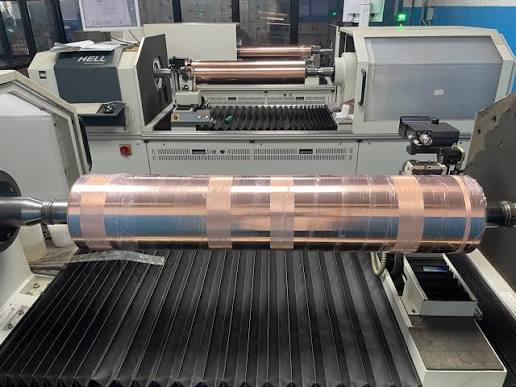
The packaging and printing industry is becoming increasingly competitive, with businesses looking for superior print quality, consistency, and production efficiency. Gravure printing is widely used for high-volume applications because it can deliver detailed images, vibrant colors, and consistent results across long production runs. At the center of this printing process are gravure printing cylinders, which play a crucial role in transferring precise amounts of ink onto different substrates.
For businesses searching for the Best Gravure printing Cylinders in India, choosing a reliable manufacturer is essential. The quality of a cylinder directly affects print sharpness, color consistency, ink transfer, and production performance. Primetech Gravures is focused on providing precision-engineered gravure cylinders designed to meet the demanding requirements of modern printing and packaging applications.
What Makes Gravure Printing Cylinders Important?
A gravure printing cylinder is a specially engineered component featuring thousands of microscopic engraved cells. These cells hold and transfer ink to the printing surface. Their depth, size, shape, and arrangement determine how much ink is transferred and ultimately influence the appearance of the printed image.
A cylinder manufactured with precision can help printers achieve consistent ink coverage and detailed reproduction. In contrast, imperfections in engraving or surface finishing may result in uneven printing, color variations, blurred images, or other production issues.
This makes the cylinder an important investment for printing companies that depend on reliable output and repeatable quality.
How Do Quality Cylinders Improve Printing Performance?
High-quality cylinders can contribute significantly to the overall efficiency of a gravure printing operation. Accurate engraving supports controlled ink transfer, allowing printers to reproduce detailed graphics and maintain consistent colors throughout production.
Some key benefits include:
- Improved image sharpness
- Consistent ink transfer
- Better color reproduction
- Reduced printing defects
- Reliable long-run performance
- Lower material wastage
- Greater production consistency
For packaging manufacturers, these benefits can be particularly valuable because large production volumes require stable printing performance over extended periods.
Why Does Precision Engraving Matter?
Precision is one of the most important characteristics of a gravure cylinder. Modern packaging designs often include fine typography, gradients, photographs, intricate patterns, and multiple colors. Reproducing these elements accurately requires carefully controlled engraving.
Advanced engraving processes allow manufacturers to create cell structures according to the specific requirements of the artwork and printing application. Proper prepress preparation, engraving, polishing, finishing, and inspection are all important steps in producing a dependable cylinder.
At Primetech Gravures, attention to precision and manufacturing quality helps support the requirements of businesses seeking dependable gravure printing solutions. Consistency throughout the cylinder manufacturing process can help printers achieve repeatable results from one production run to another.
What Industries Depend on Gravure Printing?
Gravure printing is commonly used in applications where high-quality, high-volume production is required. Flexible packaging is one of its most important areas of use, particularly for consumer products.
Common applications include:
- Food packaging
- Beverage packaging
- Personal care packaging
- Pharmaceutical packaging
- Household product packaging
- Flexible plastic films
- Laminated packaging
- Decorative printing
- Foil and specialty printing
Because these applications often involve demanding visual requirements, the quality and performance of the printing cylinder can have a direct impact on the finished product.
How Can Primetech Gravures Support Printing Businesses?
Choosing a cylinder manufacturer should involve more than simply comparing costs. Printing companies should evaluate technical capabilities, manufacturing experience, quality-control procedures, customization options, turnaround times, and customer support.
Primetech Gravures understands that different printing operations have different technical requirements. Cylinder specifications can vary depending on the printing machine, substrate, ink system, artwork, repeat length, and production objectives.
A professional cylinder manufacturer can work closely with printing businesses to understand these requirements and develop cylinders suitable for their specific applications. Proper communication between the printer and manufacturer can also help reduce production errors and improve the overall efficiency of the cylinder-development process.
Why Is Cylinder Maintenance Important?
Even a precision-manufactured cylinder requires proper handling and maintenance. Appropriate storage, transportation, cleaning, and inspection can help preserve the cylinder's condition and support longer service life.
After printing, cylinders should be cleaned carefully to prevent ink residue from accumulating inside the engraved cells. Improper cleaning can affect ink transfer and may compromise future printing performance.
Storage conditions are also important. Cylinders should be protected from unnecessary physical impact, moisture, and other factors that could affect their surface or structural integrity.
Regular inspection can help printing companies identify potential problems early and avoid unnecessary production interruptions.
What Should You Consider When Choosing a Cylinder Manufacturer?
Before ordering a gravure printing cylinder, businesses should consider several technical and operational factors. These may include the printing press specifications, substrate, artwork requirements, ink characteristics, cylinder dimensions, engraving method, and expected production volume.
Quality assurance should also be a major consideration. A manufacturer with systematic inspection and testing procedures can provide greater confidence in cylinder performance.
Businesses should also consider whether the supplier can maintain consistency for repeat orders. This is particularly important for packaging manufacturers that regularly reproduce the same designs for established brands.
A strong technical relationship with the cylinder manufacturer can make it easier to address future requirements, modifications, and production challenges.
How Is Gravure Printing Changing With Technology?
The printing industry is continuously adopting new technologies to improve productivity, quality, and resource efficiency. Gravure printing is also evolving as manufacturers seek more accurate engraving, faster production, improved repeatability, and reduced material waste.
Modern cylinder manufacturing technologies can support better control over engraved cell structures and contribute to improved print reproduction. These developments are especially relevant as packaging designs become more sophisticated and customers expect greater visual quality.
Sustainability is another growing consideration. Reducing defective prints, minimizing ink and substrate waste, and improving production efficiency can help printing businesses operate more responsibly.
Conclusion
Gravure printing cylinders are fundamental to achieving consistent, detailed, and high-quality printing results. Their engraving precision, surface quality, durability, and compatibility with specific printing requirements can directly influence the final output.
For businesses seeking reliable cylinder solutions, working with an experienced manufacturer can help ensure that technical requirements are properly understood and addressed. Primetech Gravures provides a precision-focused approach to gravure cylinder manufacturing, helping printing and packaging businesses meet the demands of modern production.
As the packaging industry continues to grow and printing standards become more demanding, investing in dependable cylinder technology can help businesses improve print quality, maintain consistency, reduce production issues, and build greater efficiency into their printing operations.